

AI Agents vs. Chatbots: An Enterprise Comparison Guide
A traditional chatbot follows scripted rules or intent-matched responses within a fixed conversation flow. An AI agent uses a large language model to reason, plan, call tools, and take multi-step action toward a goal. This guide compares them directly — architecture, cost, governance, and the enterprise use cases where each is actually the better engineering choice — remaining vendor-neutral throughout.
- Vendor-Neutral
- Engineering-Led
- Practical Decision Framework
- No Default Recommendation
- Enterprise Governance
The short version
AI agents and traditional chatbots are not two tiers of the same technology — they're different architectures built for different problems. A chatbot matches user input against rules or intents and returns a scripted or templated response. An AI agent uses a large language model to reason about a goal, plan a sequence of steps, call tools, and adapt as it goes, with memory and retrieval extending what it can act on and what it can act with.
This guide walks through what each approach actually is, compares them directly across the dimensions that matter to an enterprise buyer — decision making, memory, tool usage, knowledge sources, automation, scalability, business value, implementation complexity, maintenance, and typical use cases — and then compares the architectures each one actually runs on, layer by layer.
It also covers where each approach fits across common enterprise functions — customer support, sales, HR, operations, knowledge management, healthcare, manufacturing, and internal portals — along with a practical framework for deciding between a traditional chatbot, an AI assistant, a full AI agent, or a multi-agent system, and what each option genuinely costs to build and operate.
This is not a case for defaulting to AI agents. Agents cost more to build, more to run, and more to govern than chatbots, and a well-scoped chatbot still outperforms an agent on cost, predictability, and maintenance for narrow, high-volume, low-ambiguity tasks. The goal is to help a CEO, CTO, or technical buyer make that call correctly for their own use case, not to sell the more sophisticated option by default just because it's more capable in the abstract.
Read in order, the sections below move from definitions to a decision — what a chatbot is, what an AI agent is, how they differ dimension by dimension, how their architectures compare, where each fits across enterprise functions, a practical framework for choosing between them, what each actually costs to build and run, and the common mistakes that lead enterprises to build the wrong one for the task actually in front of them.
What is a chatbot?
A traditional chatbot matches user input against a fixed set of rules or recognized intents and returns a scripted, templated, or lookup-based response. It doesn't reason about the request or decide what to do next beyond following the conversation flow it was built with — which is exactly what makes it fast, cheap, and predictable for the tasks it's actually designed for.
- Rule-Based Systems
The earliest and still most common chatbot architecture — a decision tree or set of if-this-then-that rules that routes a conversation along predefined paths with no reasoning involved.
- Intent Detection
A classifier matches user input to one of a fixed set of known intents (e.g. "check order status," "reset password"), then triggers the scripted flow associated with that intent.
- Decision Trees & Scripted Flows
Conversations follow a predetermined branching structure — the chatbot can't improvise a path that wasn't explicitly designed into the flow ahead of time.
- Fixed, Narrow Scope
A chatbot is built to handle a defined set of scenarios well, not to generalize — anything outside that scope typically triggers a fallback or a handoff to a human.
- Predictable, Low-Cost Operation
Because behavior is fully scripted, a chatbot's responses are consistent and its running cost is low and easy to forecast, with no per-token model inference cost driving it.
- Best for Narrow, Repetitive Tasks
Chatbots excel at high-volume, low-ambiguity interactions — order status, password resets, FAQ deflection — where the value of reasoning is low and predictability is high.

What is an AI agent?
An AI agent extends a large language model with the ability to reason about a goal, plan a sequence of steps, call external tools, and maintain memory across a task or session — turning a model that can only generate text into a system that can actually accomplish multi-step work inside real business systems.
Chatbots vs. AI agents, dimension by dimension
The concrete engineering differences that determine which approach actually fits a given enterprise task — not a marketing comparison, but the dimensions a technical buyer should evaluate before committing budget to either one.
| Dimension | Traditional Chatbot | AI Agent |
|---|---|---|
| Decision Making | Follows predefined rules or matched intents; cannot deviate from scripted paths. | Reasons about the request and plans a sequence of steps toward a goal. |
| Memory | Stateless or limited to the current session, with no memory carried between conversations. | Can maintain short- and long-term memory across sessions and multi-step tasks. |
| Tool Usage | None, or a small number of integrations hardcoded directly into the conversation flow. | Calls external tools and APIs dynamically, selected based on what the task actually requires. |
| Knowledge Sources | A fixed script or FAQ database maintained and updated by hand. | Retrieval-augmented access to live knowledge bases, documents, and business systems. |
| Automation | Automates single-turn, predictable interactions within a known scope. | Automates multi-step workflows that span systems and require in-flight judgment. |
| Scalability | Scales cheaply to high volume, but strictly within its scripted scope. | Scales in capability to handle more complex work, at higher compute and oversight cost. |
| Business Value | Deflects high-volume, low-complexity requests at low cost per interaction. | Handles complex, judgment-requiring work that previously required a human. |
| Implementation Complexity | Low — a decision tree or intent classifier is enough to ship a working system. | High — requires orchestration, tool integration, memory, and governance from the start. |
| Maintenance | Manual script and intent updates as requirements or edge cases change. | Ongoing evaluation, monitoring, and prompt and tool governance as the system runs. |
| Typical Use Cases | FAQ deflection, order status lookup, appointment scheduling, simple triage. | Multi-step support resolution, research synthesis, cross-system operational tasks. |
How the two architectures actually differ
A chatbot's architecture is deliberately simple; an AI agent's is deliberately more capable — and meaningfully more complex to build, run, and govern as a result. Seeing both side by side, layer by layer, makes clear why the choice between them is an engineering tradeoff, not just a feature checklist.

Intent Classifier & Decision Tree

Scripted Response Engine

LLM Reasoning Core
Tool & Function Layer

Memory Store

Vector Database & RAG

Orchestration Layer
Human-in-the-Loop Gate
Where each approach actually fits
The right choice depends on the specific function and task, not a blanket rule — some enterprise functions are still best served by a traditional chatbot, and pretending otherwise wastes budget on unnecessary complexity.
A practical framework for choosing
- Traditional Chatbot
Choose this when the task is narrow, high-volume, and low-ambiguity — the set of valid inputs and correct responses can be fully enumerated, and predictability matters more than flexibility.
- AI Assistant
Choose this when users need conversational, LLM-generated answers grounded in real content — via RAG — but the system doesn't need to take multi-step action or call tools on its own.
- AI Agent
Choose this when the task genuinely requires reasoning, planning, and calling tools to complete multi-step work that a fixed script or a single grounded answer can't handle.
- Multi-Agent System
Choose this only when a task is complex enough to genuinely benefit from multiple specialized agents coordinating — not by default, since it multiplies both capability and operational complexity.
Common mistakes when choosing between them
The recurring, avoidable mistakes that lead enterprises to build a system that's either far more complex than the task warranted, or far less capable than the business need actually required.
Cost considerations
The cost structure of a chatbot and an AI agent differ enough that the choice between them is as much a budgeting decision as an engineering one.
- 01Implementation Cost
Building a rule-based chatbot is materially cheaper than building an agent, since it needs no orchestration, tool integration, or reasoning infrastructure to ship.
- Cost driver:
- An accurate upfront estimate that reflects which architecture the task actually requires.
- Team owns:
- Scoping the task precisely enough to avoid paying for agent capability a chatbot could deliver.
- 02Token & Compute Cost
An agent's reasoning, tool calls, and retrieved context all consume tokens on every request, a cost a scripted chatbot simply doesn't carry.
- Cost driver:
- A realistic per-interaction cost model based on real usage volume, not a demo's token count.
- Team owns:
- Providing expected query volume and complexity so the cost model reflects real usage.
- 03Maintenance Cost
A chatbot's maintenance is mostly script and intent updates; an agent's maintenance includes ongoing evaluation, monitoring, and governance as the system keeps running.
- Cost driver:
- An accurate picture of the ongoing operational cost, not just the initial build cost.
- Team owns:
- Committing to the evaluation and monitoring practice an agent needs to stay reliable.
- 04Total Cost of Ownership
Comparing the two options honestly requires weighing implementation, running, and maintenance cost together against the business value each one actually delivers.
- Cost driver:
- A total-cost comparison that determines which option is genuinely more cost-effective for the specific task.
- Team owns:
- Being honest about the business value a more capable system needs to justify its added cost.
Frequently asked questions
Technologies referenced in this guide
The stack choices referenced throughout this guide, explained in more technical depth.
OpenAI Integration
We integrate OpenAI models into enterprise software — AI assistants, retrieval-augmented search, and document intelligence architected for accuracy, cost control, and production reliability.
Explore the stackAI Agent Development
We build enterprise AI agents — systems that plan, call tools, and take real action in your existing software — architected for reliability, oversight, and production use, not chat demos.
Explore the stackREST API Development
We design and build enterprise REST APIs — resource modeling, authentication, versioning, and rate limiting architected as long-term contracts, not endpoints assembled to make one client work.
Explore the stackNode.js Development
We build enterprise backend systems with Node.js — REST APIs, real-time applications, and event-driven microservices architected for concurrency, scalability, and high availability.
Explore the stackServices this guide applies to
The engagement types this guide is written around.
AI Development
We design and build production-ready AI systems, LLM integrations, AI agents, RAG platforms, workflow automation and intelligent business software.
Explore the serviceBusiness Automation
Automate repetitive processes, connect disconnected systems and eliminate manual work through intelligent workflows, integrations and AI-powered automation.
Explore the serviceCustom Software Development
We design and build custom business software engineered around your operations, not adapted from off-the-shelf products.
Explore the serviceWhat this looks like once built
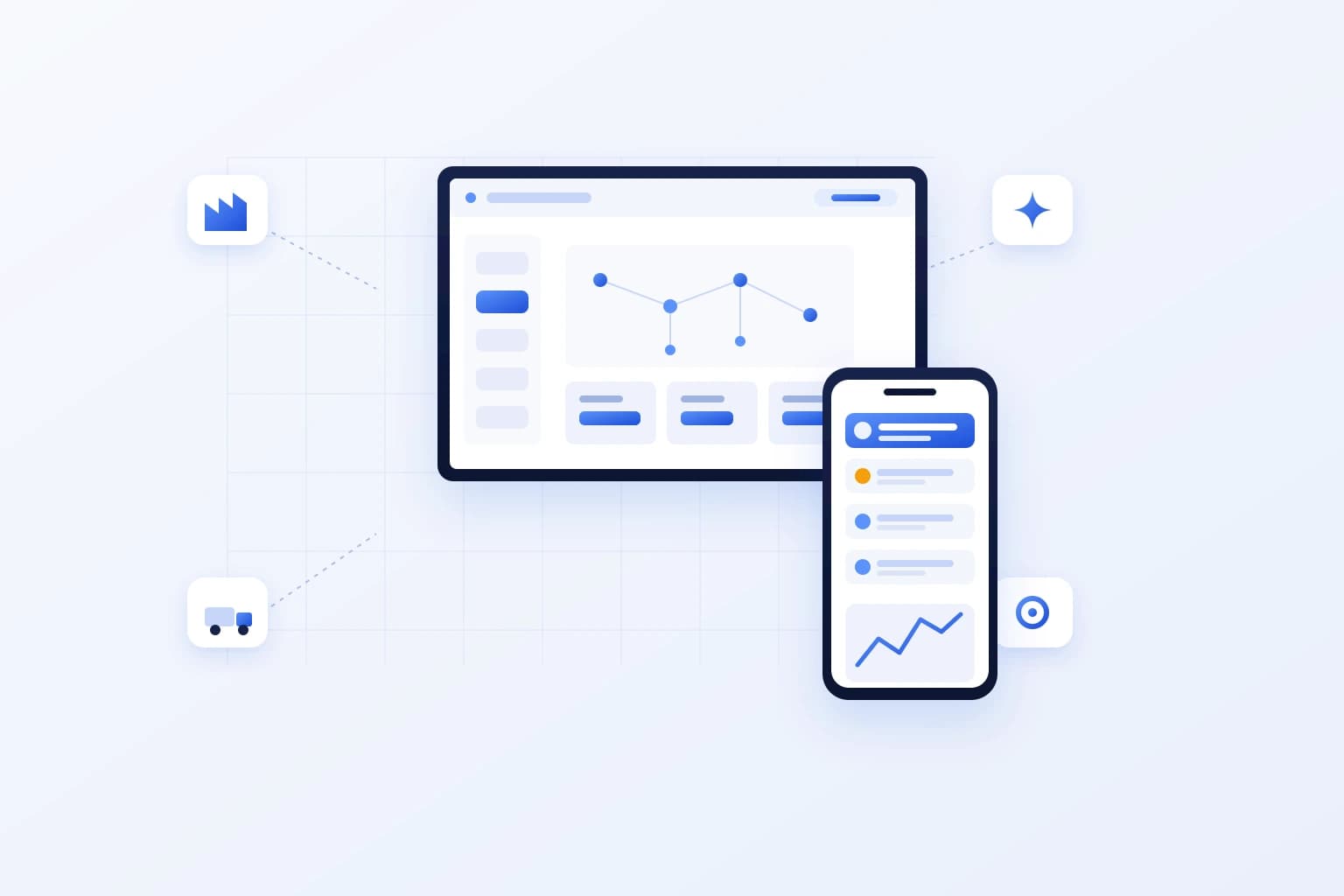
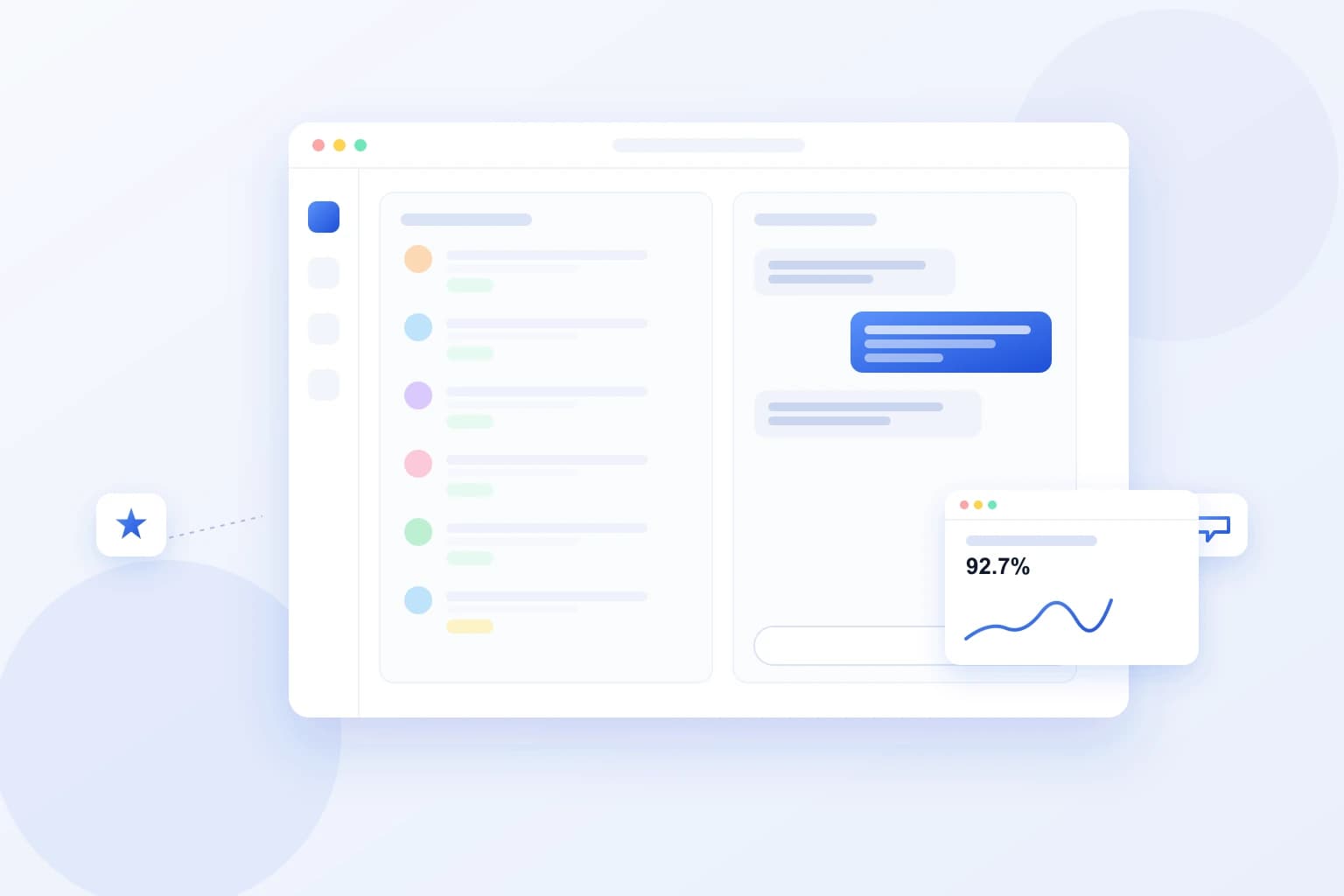
Reference architectures from our Representative Solutions collection that put this guide's ideas into practice.
More guides worth reading
Other guides that go deeper on topics this one touches on.
How to Build AI Agents for Enterprise Software
An AI agent extends a large language model with reasoning, memory, and the ability to call tools and take real actions inside business systems — this guide explains how agents are actually architected, deployed, and governed in production, not the marketing version of what an agent is.
Read the guidePrompt Engineering for Enterprise AI: A Practical Engineering Guide
Prompt engineering is the discipline of designing, structuring, and governing the inputs sent to a large language model — system prompts, context, tool definitions, output format — so its behavior is reliable, testable, and maintainable in production. This guide explains how prompt engineering is actually implemented, versioned, evaluated, and secured in enterprise AI systems, not a collection of clever one-off phrasings.
Read the guideEnterprise RAG Architecture: A Practical Engineering Guide
Retrieval-Augmented Generation (RAG) grounds a large language model's responses in real, current enterprise data by retrieving relevant content from a knowledge base and including it in the model's context before generation, instead of relying solely on what the model learned during training. This guide explains how RAG is actually architected, secured, and operated in production enterprise systems, not the marketing version of the idea.
Read the guidePurpose-built platforms in this space
Dedicated landing pages for the specific platforms this guide relates to.
AI Development Company in South Korea
Enterprise AI software, LLM integrations, and AI agents built for Korean and international companies.
See the solutionCustom Software Development Company
Enterprise systems, CRMs, ERPs, and internal tools tailored to how your operation actually runs.
See the solutionFor CTOs and technical leadership
Executive-level engagements for organisations planning at a larger scale.
Ready to start your project?
Tell us what you're building — we'll tell you honestly whether we're the right fit.
No sales pressure. Just a direct technical conversation.