

Energy and Utilities Software Development
Aixo Lab builds energy and utilities software for power producers, solar and storage operators, energy service companies and facility owners in Korea — asset monitoring, meter-data and billing platforms, demand analytics and ESG reporting.
- Asset Monitoring
- Meter Data
- Demand Analytics
- Renewables
- ESG Reporting
- Estimated timeline
- Typically 12–18 weeks for a first production module
- Platforms
- Web · Mobile · Cloud
- Tech stack
- Next.js · Python · PostgreSQL · MQTT
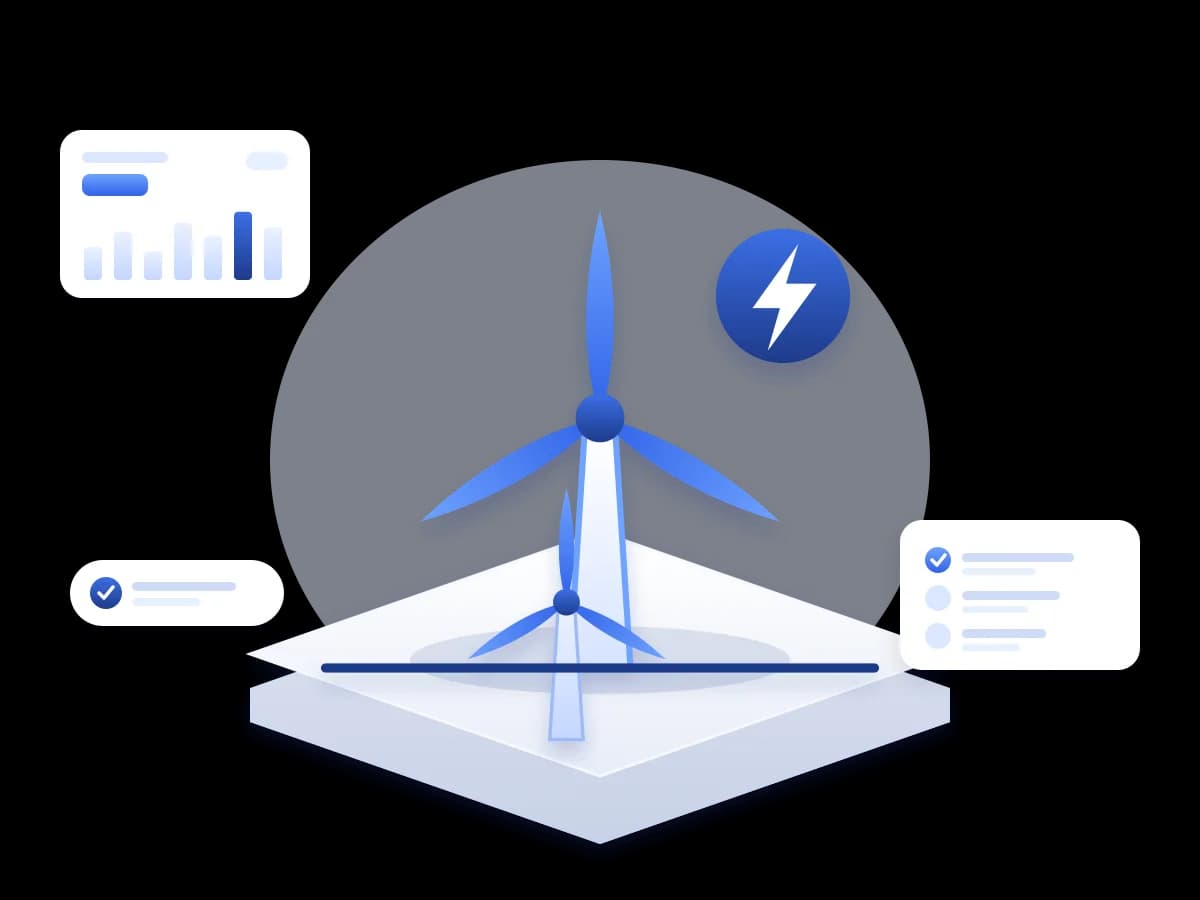
Energy and Utilities Overview
Aixo Lab builds energy and utilities software for power producers, solar and storage operators, energy service companies and facility owners in Korea — asset monitoring, meter-data and billing platforms, demand analytics and ESG reporting.
- Live View of Every Asset
Output, status and faults across generation, storage and consumption in one operational picture.
- Demand and Cost Under Control
Consumption and tariff data analysed together, so peaks, waste and savings opportunities are visible.
- Reporting Built In
Energy, emissions and ESG figures generated from the same data operations rely on, not rebuilt by hand each period.
Everything under one roof
Everything included in this engagement, from architecture to long-term support — one team, one system.
Why Energy Companies Choose Aixo Lab
- We Handle Time-series Data at Scale
Meters and sensors produce relentless streams. Storage, aggregation and queries are designed so dashboards and bills stay fast and accurate as volumes grow.
- We Connect Mixed Assets and Vendors
Inverters, meters, storage systems and building controllers from different vendors are integrated into one consistent data model.
- We Build for Reliability and Security
Operational data is sensitive and availability matters. Access control, network segmentation and audit trails are part of the architecture.
- We Make Data Decision-ready
Alerts, forecasts and reports are designed around the decisions operators and finance teams make, not around raw data volume.
The energy systems we typically build
Concrete system types, each designed around how operators and energy teams actually work.

Renewable Asset Monitoring Platform
Meter Data and Billing System
Building Energy Management Dashboard
Demand Response Platform
EV Charging and Energy Portal

ESG Reporting Dashboard
The platform capabilities energy operations rely on
Capabilities built in from the start, so the platform grows from one site to a portfolio without rework.
Built on a modern, production-grade stack
Every technology here is a deliberate choice, not a default.
How we work
The same disciplined process behind every engagement, from the first architecture decision to launch.
- 01Discovery
Understand the business problem and its real constraints.
- Output:
- Scope and goals document
- Your involvement:
- Initial workshop
- 02Product definition
Translate the problem into concrete product requirements.
- Output:
- Feature spec and priorities
- Your involvement:
- Requirements review
- 03UX/UI design
Design user flows and interface before development starts.
- Output:
- Wireframes and design system
- Your involvement:
- Design feedback
- 04Technical architecture
Define system structure, data flow, and technology stack.
- Output:
- Architecture document
- Your involvement:
- Technical review (optional)
- 05Iterative development
Build in short cycles with visible, regular progress.
- Output:
- Regularly shipped working versions
- Your involvement:
- Sprint review participation
- 06Quality assurance
Test functionality, performance, and security before release.
- Output:
- Test results and fixes
- Your involvement:
- Acceptance sign-off
- 07Launch

Deploy to production with a rollback plan in place.
- Output:
- Product deployed to production
- Your involvement:
- Launch approval
- 08Continuous improvement
Monitor, maintain, and evolve the product after launch.
- Output:
- Maintenance and improvement roadmap
- Your involvement:
- Regular check-in meetings
Frequently asked questions
Technologies we build this on
The stack pieces most relevant to a project like this one.
PostgreSQL Development
We design and operate PostgreSQL databases for enterprise software — schema design, replication, and partitioning architected around the domain's actual data integrity and scale requirements, not a generic reference schema.
Explore the stackDocker Development
We containerize enterprise software with Docker as a deliberate engineering discipline — image builds, networking, volumes, and secrets designed for a specific production environment, not a development convenience left unchanged at deploy time.
Explore the stackAWS Cloud Development
We architect and run enterprise software on AWS — high availability, auto scaling, and disaster recovery designed as engineering decisions, not defaults inherited from a template.
Explore the stackServices that pair with this work
Other engineering disciplines projects like this one often need alongside it.
Custom Software Development
We design and build custom business software engineered around your operations, not adapted from off-the-shelf products.
Explore the serviceBusiness Automation
Automate repetitive processes, connect disconnected systems and eliminate manual work through intelligent workflows, integrations and AI-powered automation.
Explore the serviceAI Development
We design and build production-ready AI systems, LLM integrations, AI agents, RAG platforms, workflow automation and intelligent business software.
Explore the serviceWhat this looks like once built
Reference architectures from our Representative Solutions collection that plausibly apply here.
Purpose-built platforms in this space
Dedicated landing pages for the specific platforms we build most often.
Custom Software Development Company
Enterprise systems, CRMs, ERPs, and internal tools tailored to how your operation actually runs.
See the solutionManufacturing Software Development Company
Industrial software and smart factory platforms that improve production efficiency and visibility.
See the solutionAI Development Company in South Korea
Enterprise AI software, LLM integrations, and AI agents built for Korean and international companies.
See the solutionFor CTOs and technical leadership
Executive-level engagements for organisations planning at a larger scale.
Digital Transformation Consulting Services
Helping enterprise leaders modernise legacy systems and build digital products through disciplined engineering.
Explore the programSoftware Architecture Consulting Services
Scalable, secure, and maintainable software architecture designed to support long-term business growth.
Explore the programReady to start your project?
Tell us what you're building — we'll tell you honestly whether we're the right fit.
No sales pressure. Just a direct technical conversation.